
SOME aircraft entertain. Others stay with you for life. For me, the Avro Vulcan is one of those aircraft.
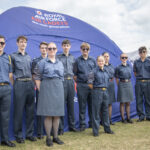
As an Air Cadet in around 1989 or 1990, I travelled to an airshow somewhere outside Sussex – perhaps Farnborough or the Royal International Air Tattoo. I can’t remember exactly where, but I vividly remember what happened next.
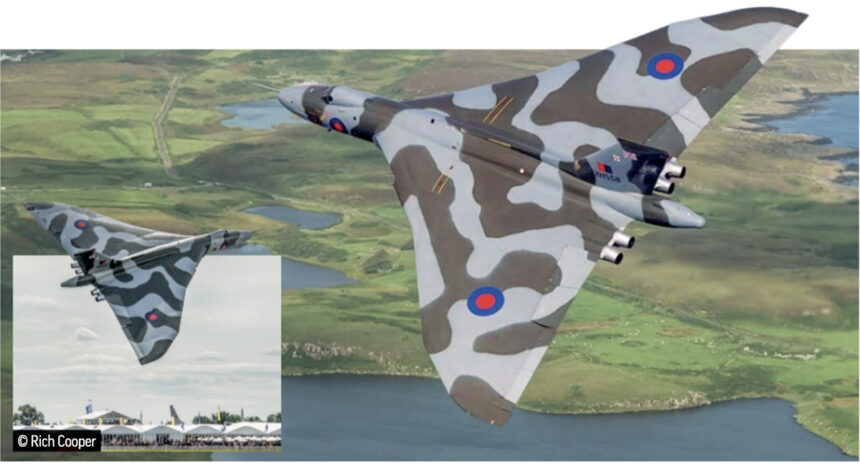
At the end of the runway sat an enormous delta-wing bomber. It looked impossibly wide, yet remarkably elegant. As the crew prepared for take-off, spectators instinctively covered their ears. Then came the unmistakable howl of the four Olympus engines as the Vulcan accelerated down the runway before lifting into the sky with astonishing power.
What happened next seemed to defy physics. This giant Cold War bomber rolled into its iconic steep banking turn before racing past the crowd at breathtaking speed. The gasp from thousands of spectators said everything. It was a moment I never forgot.
Little did I know that around 25 years later, my hometown of Eastbourne would become part of the Vulcan’s own farewell story.
By 2015, Avro Vulcan XH558 had become far more than just another historic aircraft. Built in 1960, she was the first Vulcan B.2 to enter RAF service, the longest-serving Vulcan in the Royal Air Force and the last to retire from military service in 1993.
Thanks to one of the most ambitious heritage aviation restoration projects ever undertaken, thousands of supporters helped return her to the skies in 2007, allowing millions of people to experience the sight and sound of Britain’s most iconic bomber once again.
For eight remarkable years, XH558 toured the country, inspiring a whole new generation of aviation enthusiasts. But early in 2015 came the announcement nobody wanted to hear. That season would be her last.
It wasn’t a lack of public support that grounded the aircraft. Nor was it a shortage of volunteers. Instead, the specialist engineering support legally required to keep such a unique aircraft flying would no longer be available.
The decision meant the Vulcan to the Sky Trust had no option but to make 2015 a farewell tour, giving as many people as possible one final opportunity to witness Britain’s last flying Vulcan.
When news broke that XH558 would be appearing at Airbourne, excitement spread quickly across Eastbourne. Everyone knew this wasn’t just another display – it was goodbye.
I remember taking my three-year-old son to Beachy Head before the display. As we waited overlooking the lighthouse, there was a real sense of anticipation. Then, suddenly, the unmistakable silhouette emerged around the cliffs. In an instant, I was transported back to being that teenage Air Cadet.
The same graceful delta wing. The same unmistakable howl. The same feeling of complete awe.
Standing there with my son, I realised how lucky we were. I had first watched the Vulcan as a teenager; now I was sharing one of its final displays with the next generation.
Across Eastbourne’s three-mile seafront, tens of thousands of people watched as XH558 performed one of the most memorable displays Airbourne has ever seen.
For many Sussex residents, it would be their final opportunity to experience the aircraft that had become the undisputed star of Britain’s airshow circuit.
Just a few days later, I was fortunate enough to see XH558 one final time at the Shoreham Airshow. The day would sadly become remembered for reasons far beyond aviation, and instead of its full display routine, the Vulcan made a dignified flypast before disappearing into the distance.
On 28 October 2015, more than 55 years after her maiden flight, XH558 took to the skies once more from her home at Doncaster Sheffield Airport. After a short farewell flight, she landed for the last time before receiving a traditional water cannon salute from airport fire crews, bringing an extraordinary flying career to a close. It also marked the final flight of an all-British designed and built four-engined jet aircraft.
Thankfully, the story did not end there.
Today, XH558 remains preserved by the Vulcan to the Sky Trust at the Doncaster Sheffield Airport – its work has evolved from keeping the aircraft airborne to preserving it for future generations.
Visitors can still stand beneath the magnificent bomber, learn about its remarkable history and discover the engineering innovation that made the Vulcan one of Britain’s greatest aviation achievements. The Trust continues to inspire young people through education while ensuring the aircraft’s legacy lives on.
Every year, Airbourne brings together some of the world’s finest display aircraft, but there are many who still quietly hope that one day they’ll hear that unforgettable Olympus howl echoing across Eastbourne seafront once more.
For more information, visit vulcantothesky.org